

Alcoa’s postwar jungle cruises took passengers from Trinidad up Suriname’s shallow Cottica River aboard smaller ships such as the SS Leader and MV Sentinel. Discover the vintage voyage, then see how a slower stay can help you explore Tobago beyond a cruise-ship stop.
A 1950s Jungle Cruise from Trinidad: Alcoa on the Cottica River
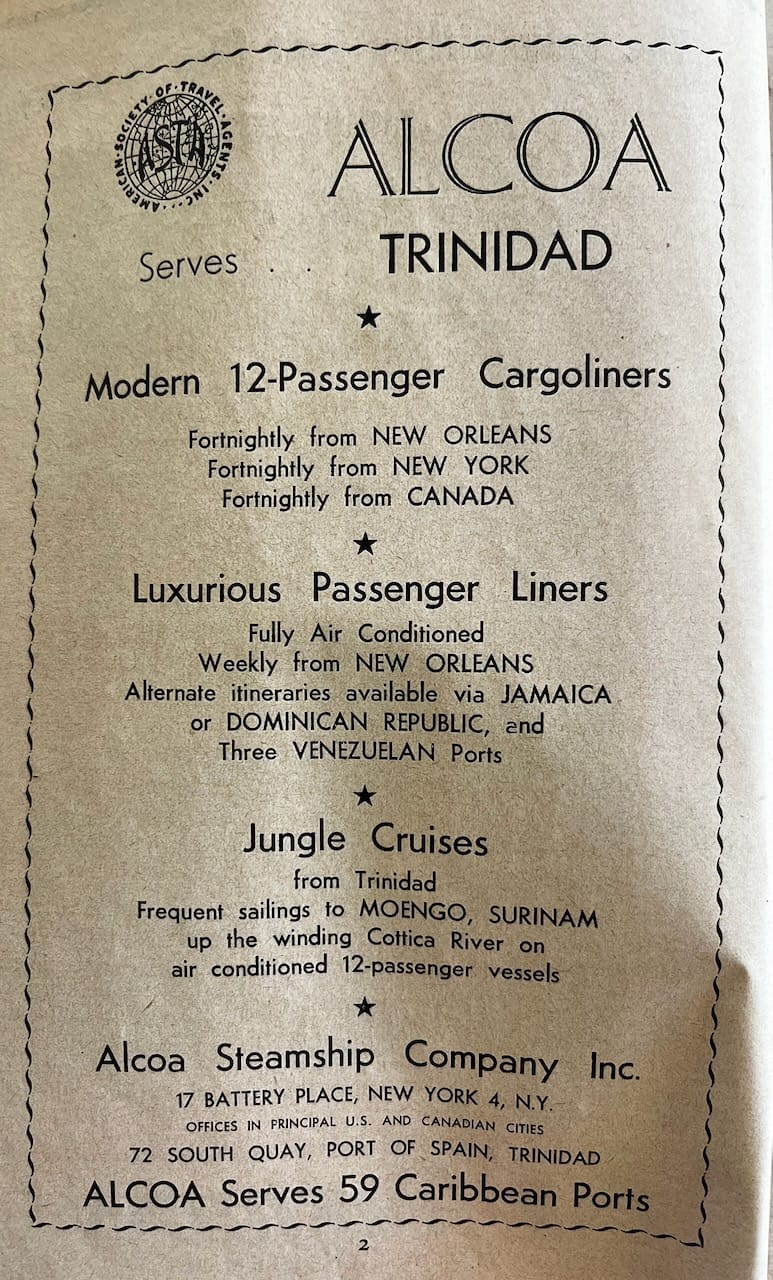
While exploring an advertisement in my vintage Island of Tobago guidebook, I came across a remarkable way to travel through the Caribbean: Alcoa’s jungle cruises.
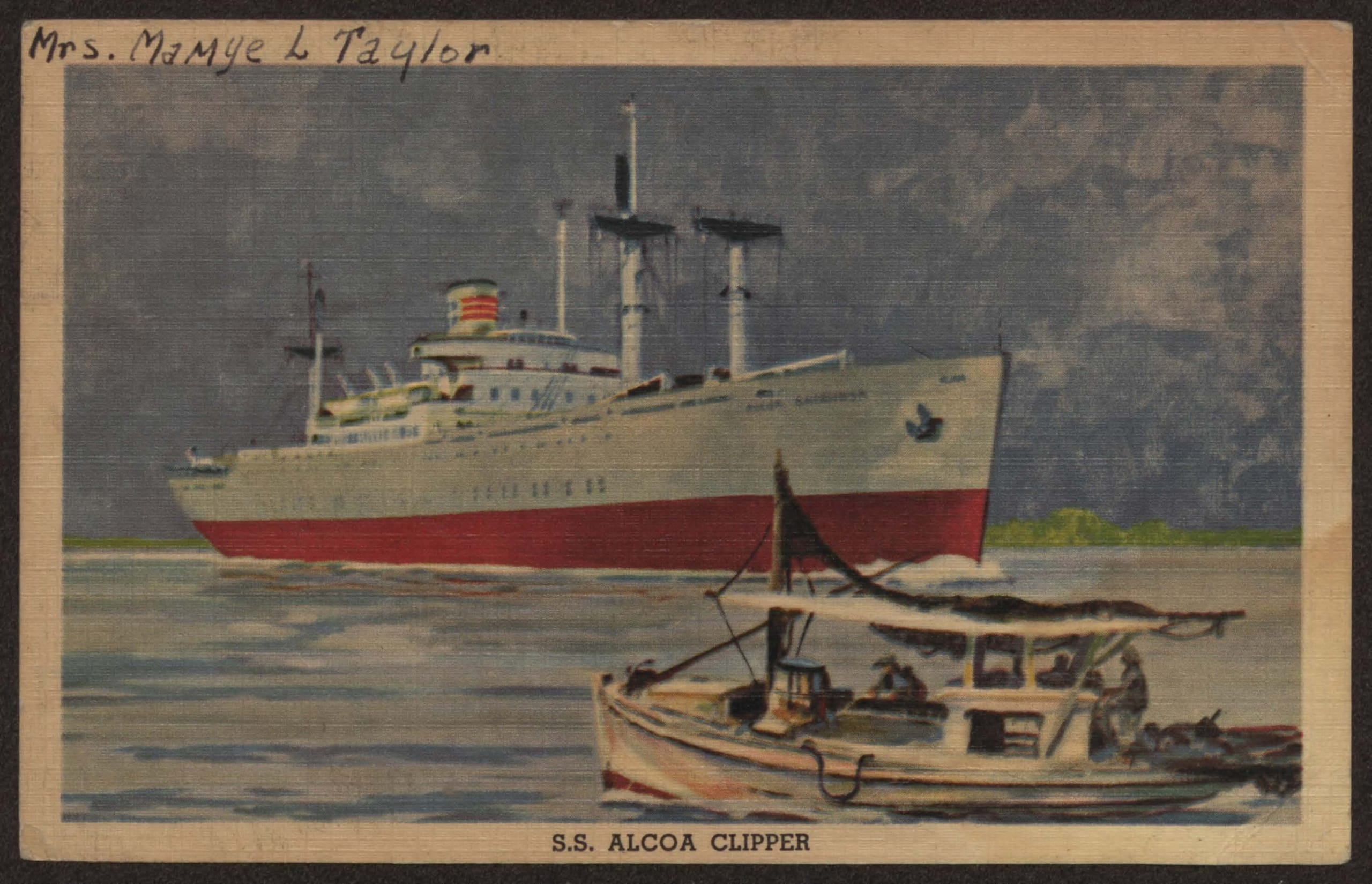
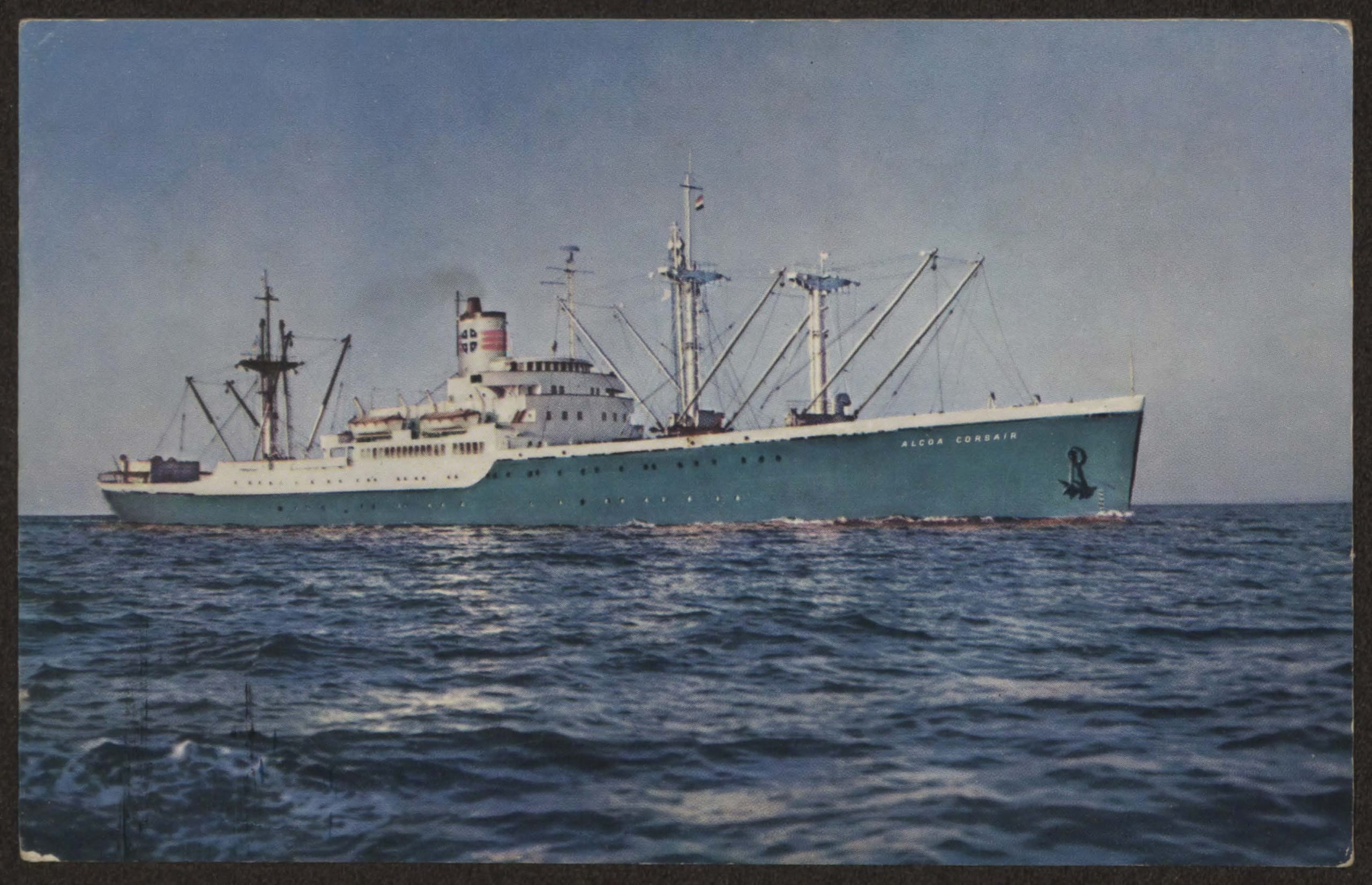
After the Second World War, Alcoa combined its passenger service with its cargo business, carrying travellers alongside the company’s bauxite trade. The Alcoa Cavalier, Alcoa Clipper, and Alcoa Corsair were among its best-known passenger ships.
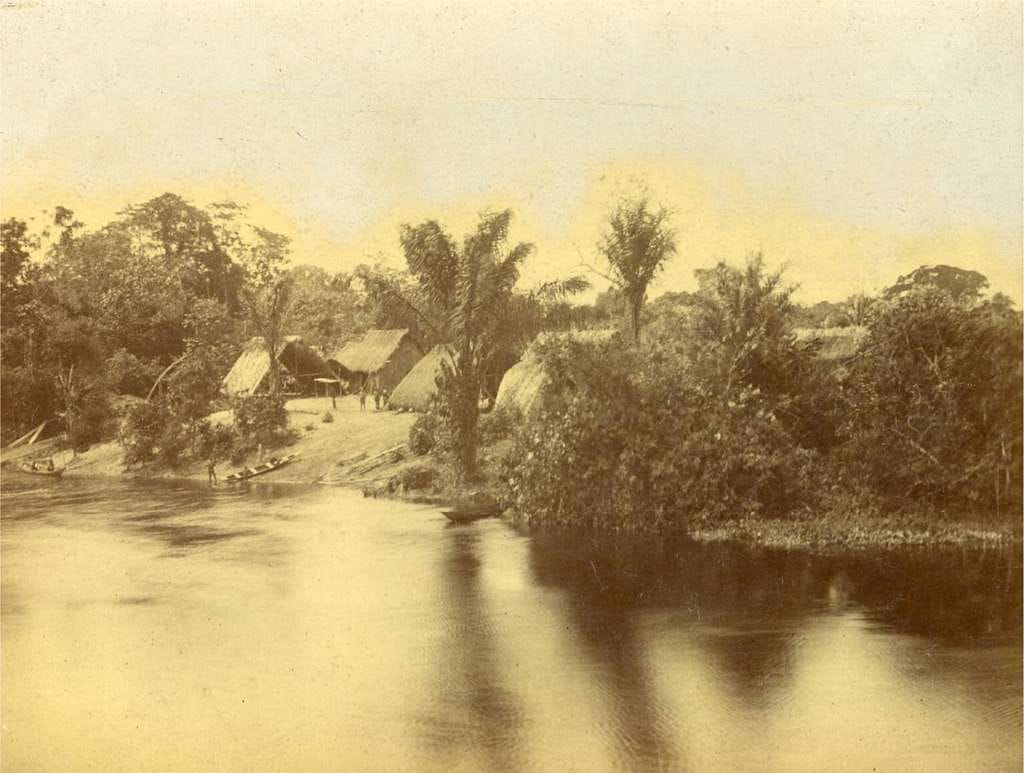
But the guide’s account of the jungle cruises is what really caught my eye. These trips travelled from Trinidad up the Cottica River in Suriname. Because Alcoa’s larger ships drew too much water for the shallow river, passengers transferred to specially suited vessels, including the SS Leader and MV Sentinel.
The boats departed from Point Tembladora in Carenage, Trinidad. Though smaller, they still offered plenty of comfort: air-conditioned decks, a sun lounge, swimming pool, bar, dining saloon, and both state and standard cabins.
In places, the Cottica River was so narrow that jungle foliage brushed against the decks. Local people paddled up in dugout canoes to offer carvings and other souvenirs—a close encounter with river life that feels a world away from today’s cruise experience.
A trip from Trinidad up the river cost between US$300 and US$350. A longer journey from New Orleans ran from US$500 to US$650. That would be roughly US$3,500 to US$9,000 today, depending on the fare and the inflation estimate. It was a luxurious adventure, and the price reflected it.
By the late 1960s, passenger ships faced growing competition from faster, cheaper air travel and newer cruise ships built around leisure. Alcoa’s passenger service eventually ended, though the company continued its work in the aluminium industry.
Cruise ships still call at Tobago, giving visitors a chance to step ashore and enjoy the island for a few hours. But there’s so much more to discover when you have time to explore at your own pace—from the beaches and rainforest to the food, villages, and local stories.
A villa stay gives you the freedom to make Tobago your own. Take a look and browse our Tobago villas for rent, then plan a holiday with room to slow down and see more of the island.