

An old Tobago guidebook argues that the island inspired Daniel Defoe’s Robinson Crusoe. Explore the claim, the novel’s links to Alexander Selkirk, and why Tobago still captures the imagination.
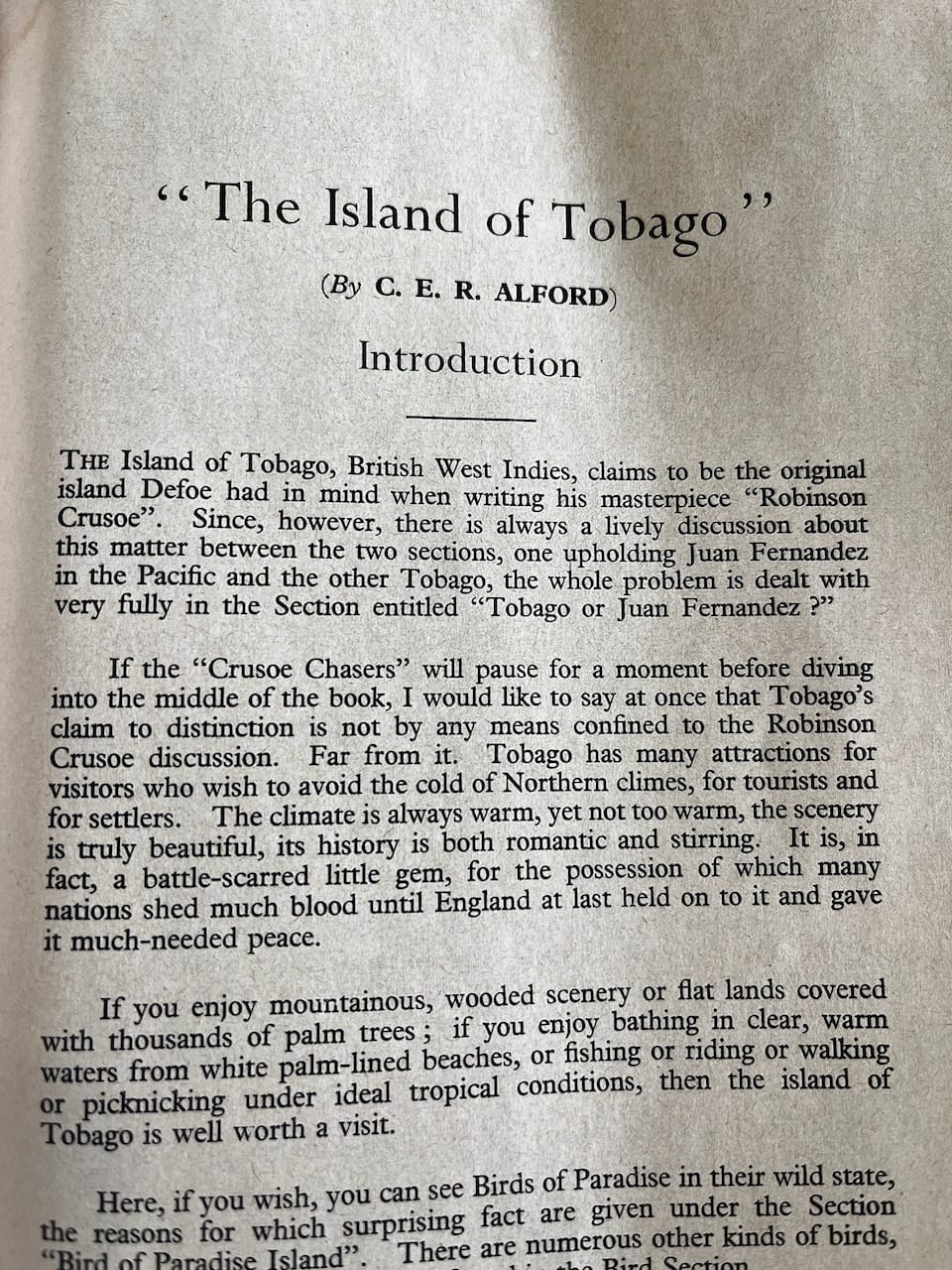
Today’s post begins with the introduction to my vintage Island of Tobago guidebook. In the photograph, you can see the opening paragraphs written by Commander Alford, who makes a bold claim: Tobago was the island Daniel Defoe had in mind when he wrote Robinson Crusoe.
Published in 1719, the novel tells the story of a sailor shipwrecked on a remote island. The story is often linked to Alexander Selkirk, a Scottish sailor who was left on Más a Tierra, in the Juan Fernández Islands off the coast of Chile, in 1704. Selkirk had argued that his ship was unseaworthy and chose to remain on the island when the captain refused to make repairs. The captain sailed on—and the ship was later wrecked off the coast of Colombia. Selkirk was rescued in 1709, after more than four years alone.
But was Defoe’s island really Tobago? The guidebook certainly thought so. Its claim is part of a long-running debate: Selkirk’s experience may have influenced Defoe, but the novel also draws on other stories of survival and adventure. Tobago has been proposed as an inspiration, in part because Defoe places Crusoe’s island near the mouth of the Orinoco.
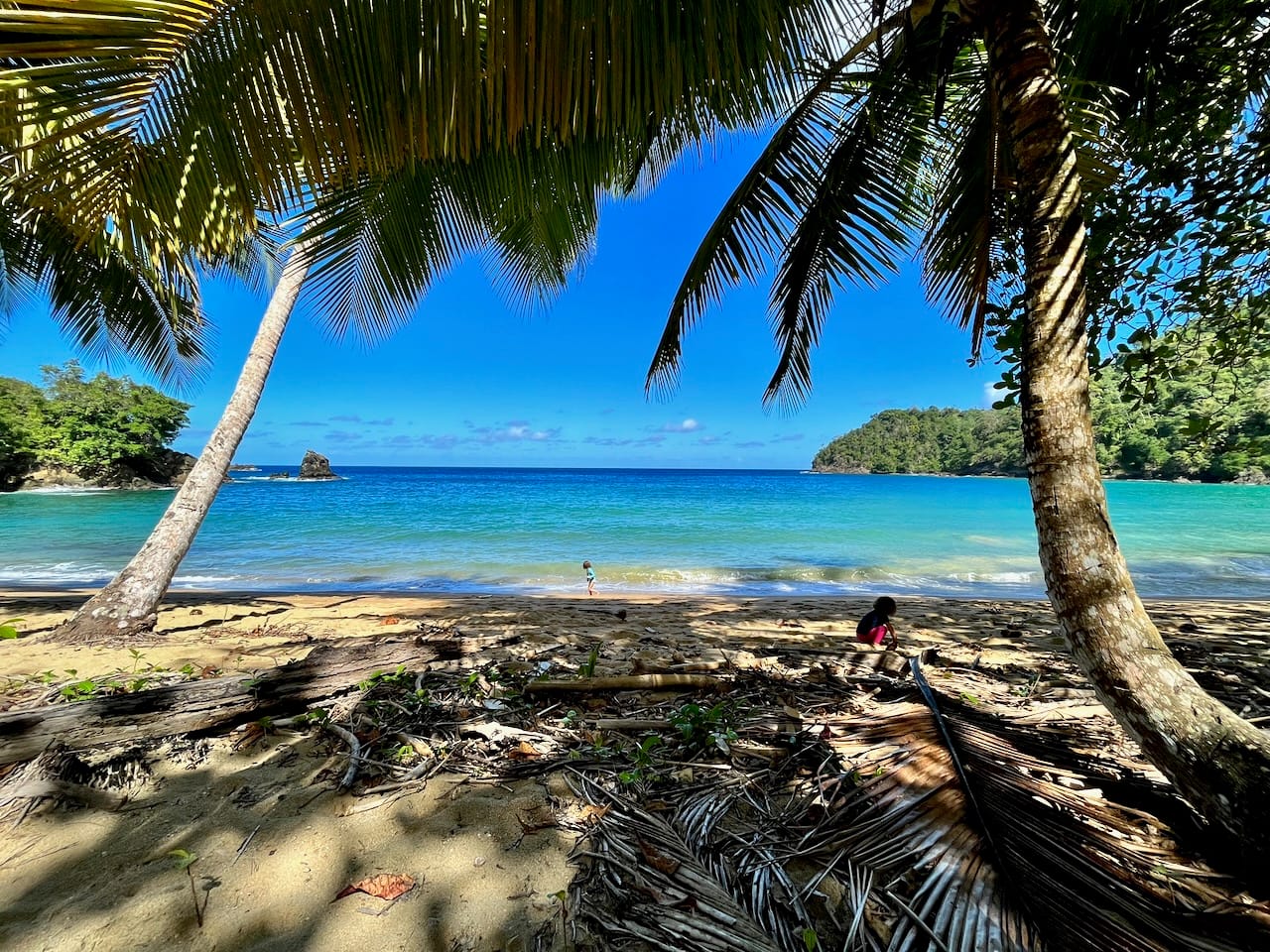
I love finding this kind of claim in an old guidebook. It captures the way Tobago has long inspired stories of adventure, mystery, and life on a faraway island. Whether or not Tobago was the one real-life model for Crusoe’s island, it’s easy to see why readers have imagined it that way.
And you don’t need to build a thatched hut to have a Tobago adventure. Stay somewhere comfortable, take your time, and explore the island at your own pace. Explore our Tobago villa rentals and start planning your own island story.